
Future Forum 2026: Artificial Intelligence and data redefine the future of energy and infrastructure
The role of Artificial Intelligence in energy management, infrastructure development and strategic decision making was at the centre of the first thematic discussion of Future Forum 2026, organised by Capacitor Partners.
The role of Artificial Intelligence in energy management, infrastructure development and strategic decision making was at the centre of the first thematic discussion of Future Forum 2026, organised by Capacitor Partners.
The first Future Forum of Capacitor Partners, under the central theme “How AI Reshapes & Moves Markets”, was successfully held on 17 November 2026 at The Landmark Nicosia. The event brought together representatives of the State, the business community and the technology sector, highlighting the opportunities created by Artificial Intelligence.
The event was honoured by the presence of the Minister of Energy, Commerce and Industry, Mr. Michael Damianos, the Chief Scientist of the Republic of Cyprus, Mr. Demetris Skourides, the Mayor of Nicosia, Mr. Charalambos Prountzos, and the Chairman of the National Board for Research and Innovation, Professor Philippos Patsalis.
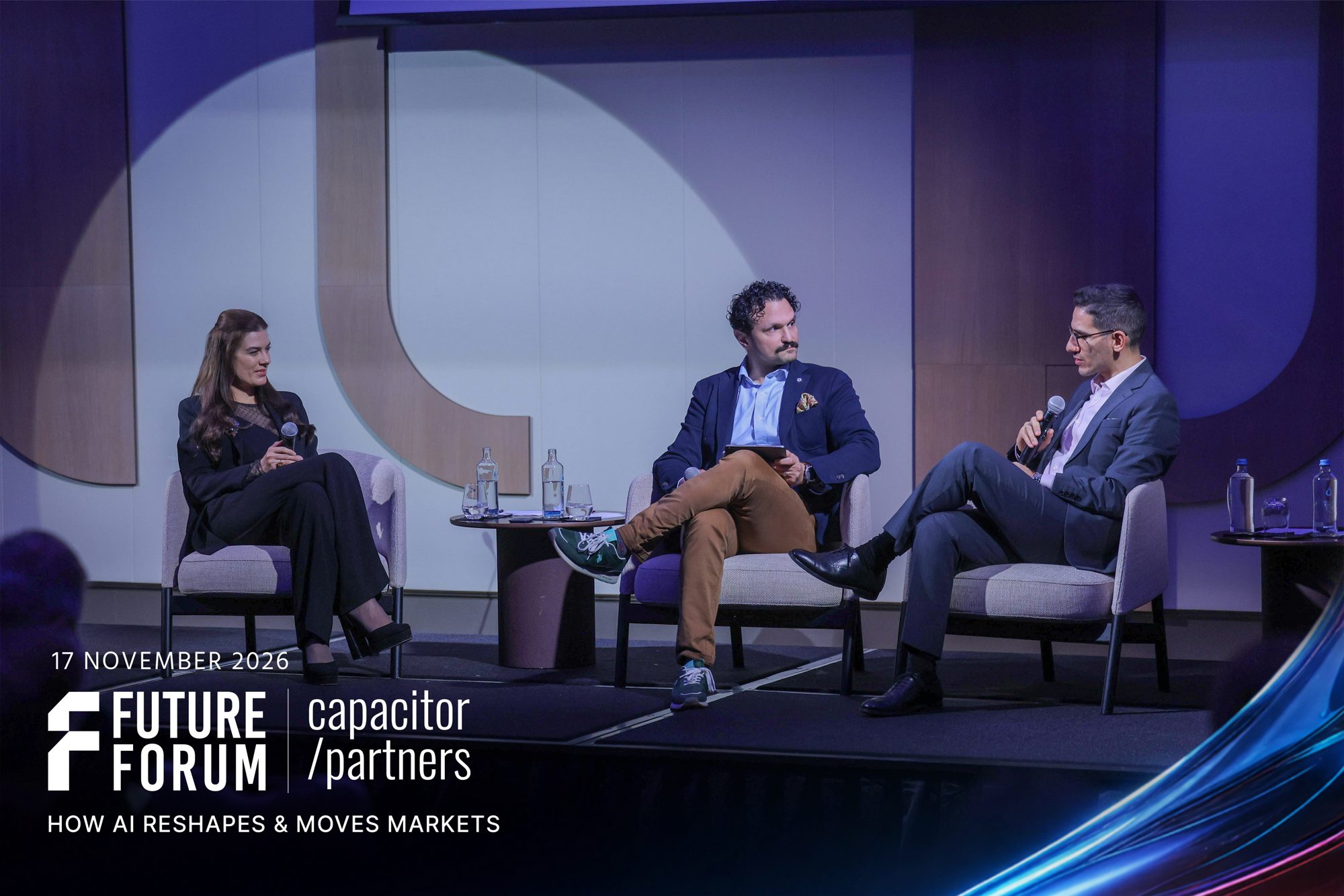
The first thematic discussion focused on the transformation of the energy sector and infrastructure, examining how the use of data and Artificial Intelligence can enhance efficiency, sustainability and decision making.
The panel comprised Ms. Natasa Pilides, General Manager of eWise Cyprus and former Minister, and Mr. Tes Adamou, Founder and CEO of EEDN. The discussion was moderated by Mr. Alexandros Karagiannis, Transformation Consultant at Capacitor Partners for Greece and Cyprus.
The energy transition requires modern infrastructure

The discussion began with a reference to the challenges facing the energy system of Cyprus, a characteristic example being the 306 GWh of electricity that went unused in 2025 because of grid absorption limitations.
Ms. Pilides underlined that the energy transition does not depend solely on increasing renewable energy production, but also requires parallel investment in modernising grids and in storage technologies.
As she explained, the rapid growth of photovoltaics was not matched by a corresponding development of infrastructure, creating challenges in managing the energy produced.
In this context, she highlighted the need for a comprehensive and flexible energy policy, able to adapt to technological developments. Artificial Intelligence can contribute to more effective management of energy production, storage and consumption.
The digital transformation of the energy sector
Referring to the need to invest in new technologies, Ms. Pilides stressed that the timely adoption of digital tools is a strategic necessity for businesses.
“The right time is yesterday,” she said characteristically, noting that today’s consumers are better informed and look for complete, high quality and personalised experiences.
Artificial Intelligence enables businesses to analyse consumption data, identify opportunities for savings and improve their services.
Particular reference was made to the transformation of fuel stations, which are evolving into modern service points, combining digital services with electric mobility infrastructure. In this context, Ms. Pilides referred to the installation of electric vehicle chargers at Petrolina and Esso stations.
From data to faster decision making
Mr. Adamou focused on the potential of Artificial Intelligence in the construction sector and in the management of large infrastructure projects.
As he explained, the use of advanced digital tools makes it possible to turn a large volume of data into usable information, offering a complete picture of a project’s progress, cost and potential risks.
A characteristic example was the construction of a research laboratory in London, where linking the work schedule and quantity data with Artificial Intelligence tools made it possible to predict a rise in the price of steel.
The timely use of this information led to a decision to procure materials with an estimated cost saving of 8% to 9%.
The example highlighted the ability of Artificial Intelligence to shorten the time between data collection and decision making, enhancing the effectiveness of projects.
Digital infrastructure and human resources
Mr. Adamou also referred to the importance of digital twins and Building Information Modeling (BIM), technologies that enhance the design and management of projects.
He underlined, however, that their effective use requires reliable data, complete digitisation and the participation of all stakeholders.
Particular emphasis was placed on the need to invest in training and in upgrading the digital skills of the workforce, as a basic prerequisite for successful digital transformation.
Priorities for Cyprus until 2030
With competitiveness, innovation and sustainability as the point of reference, the participants presented proposals to accelerate digital transformation in Cyprus.
Mr. Adamou proposed the development of a horizontal strategy for the use of Artificial Intelligence in the construction sector, with an emphasis on digital infrastructure and the training of professionals.
Ms. Pilides highlighted the need to create a smart electronic public procurement system, which would combine technological upgrading with the simplification of procedures, accelerating the delivery of large projects and creating economic benefits for the State and its citizens.
Concluding, Mr. Karagiannis underlined that the challenge is not limited to producing more energy or collecting more data, but lies in managing them effectively and turning them into timely, well founded decisions.
The priorities of the business community
Of particular interest were the results of the live vote, in which 108 professionals from 71 companies took part.
The most important priorities were the upgrading of the electricity grid and the development of energy storage infrastructure, followed by digital connectivity and public transport.
For the public sector, participants highlighted the potential of Artificial Intelligence in licensing, in traffic and transport management, and in education.
About Future Forum
Future Forum is an initiative of Capacitor Partners, aiming to establish an annual platform for strategic dialogue on the developments shaping the future of businesses and markets.
The first edition focused on three pillars: the future of energy and infrastructure, the transformation of retail and consumer behaviour, and the new growth opportunities in the economy of the future.
The event took place with the participation of invited clients and partners of the company, strengthening the exchange of knowledge and professional networking.
About Capacitor Partners
Capacitor Partners redefines how large organisations operate, strengthening their ability to make full use of their potential and achieve their strategic goals.
The company specialises in digital and operational transformation, process redesign, Artificial Intelligence and digital product management. By combining technology with the reorganisation of operational functions, it supports improved productivity, reduced operating costs and the development of new capabilities.
Its project portfolio includes collaborations with government bodies, European institutions and leading international businesses, covering 11 different sectors of economic activity.
More information: capacitorpartners.com/future-forum
More in CompanyNews

Future Forum 2026: Capacitor Partners Hosts Its First Event Focused on Artificial Intelligence

Future Forum 2026: Trust and Artificial Intelligence shape the future of retail